Technical Insights
Can I Use the RSH2 with an Oscilloscope?
 2 min
2 min
5 min



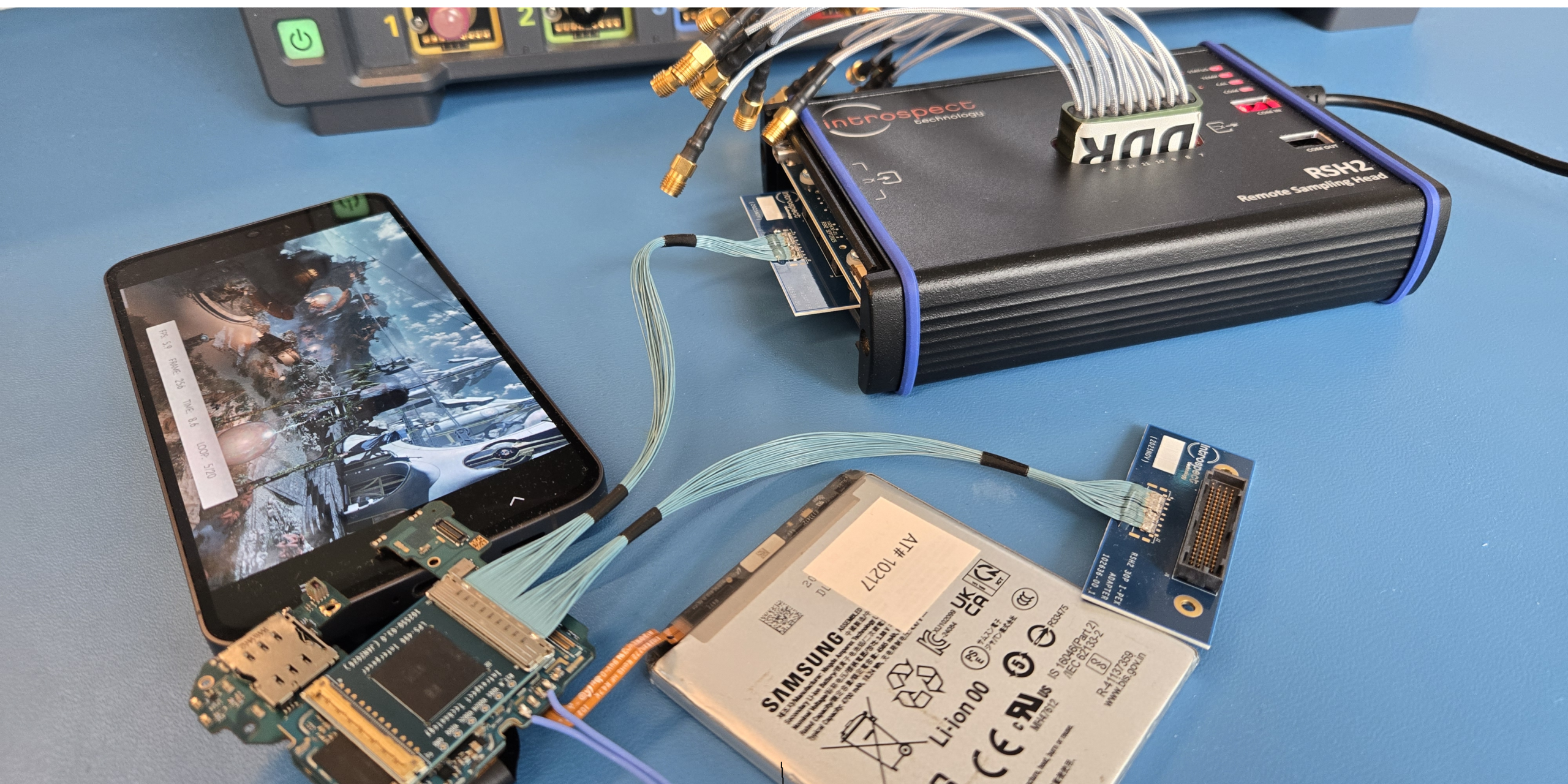

At the Introspect R&D labs, the RSH2 active probe has become a workhorse for oscilloscope probing by our hardware engineers. Providing high bandwidth, multi-conductor/multi-channel probing, and a clean shielded enclosure, it helps us measure signals with high fidelity and low noise. See for example Can I Use the RSH2 with an Oscilloscope?, where we probed MIPI D-PHY signals on an oscilloscope.
Similar to that article, here, we asked ourselves whether we could probe a new-generation smartphone with LPDDR5x package-on-package memory. To do this, we needed to use an integrated-tip interposer, and the results were fascinating. Read on to learn more!
Figure 1 shows the setup that we have used. Being a smartphone, you can see how tiny the logic board of the phone is. In the figure, the integrated-tip interposer is sitting in between the CPU and the LPDDR5x memory device. The interposer allowed us to probe both the CA bus and the DQ bus. The interposer provides the probed signals through a shielded micro-coaxial cable interface, thus eliminating the need for soldering down external active probe tips.
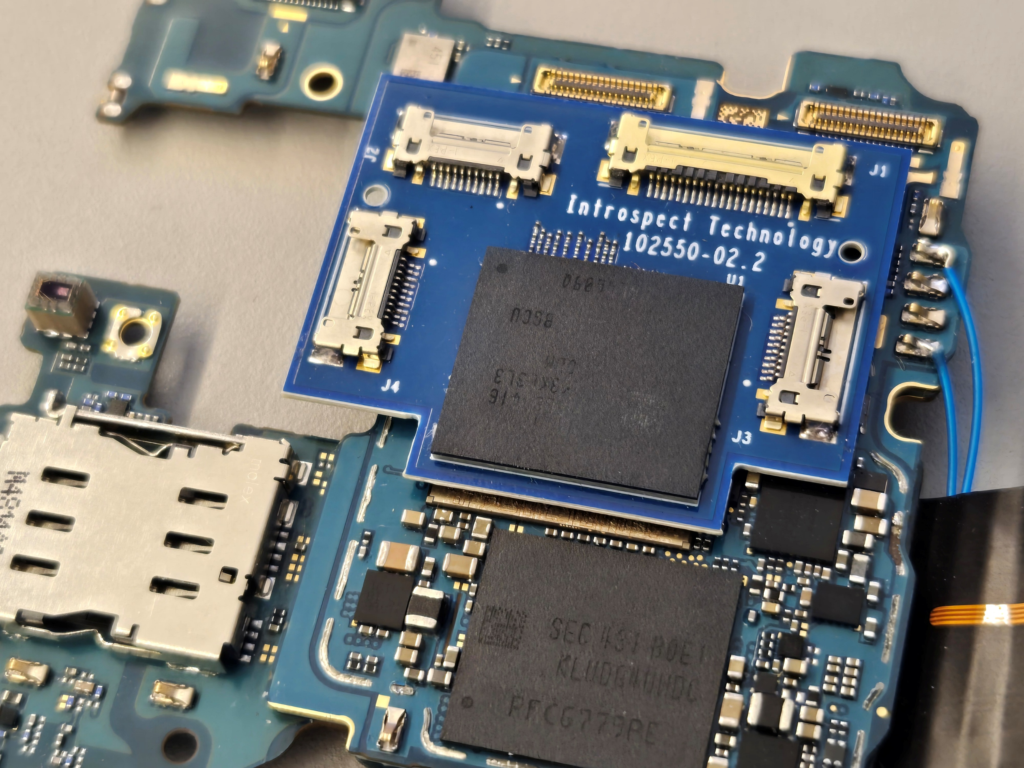
Figure 1: Integrated-tip interposer installed on smartphone with Package-on-Package (POP) LPDDR5x memory device.
Figure 2 shows a waveform of one of the CA signals on the phone while it was running a heavy payload (aka memory stress test) application. As can be seen, the CA bus is running at 2.133 Gbps! This is fast, and it corresponds to an 8533 MT/s implementation in this phone – impressive.
Looking closely at Figure 2, we noticed that the voltage amplitude on the CA bus was quite large for typical LPDDR memory devices. After closer inspection, we concluded that the CPU was running the memory CA bus in unterminated mode, even though the memory is operating at 8533 MT/s. This is again truly impressive, and it explains how the phone is able to deliver such high performance with very low power dissipation.
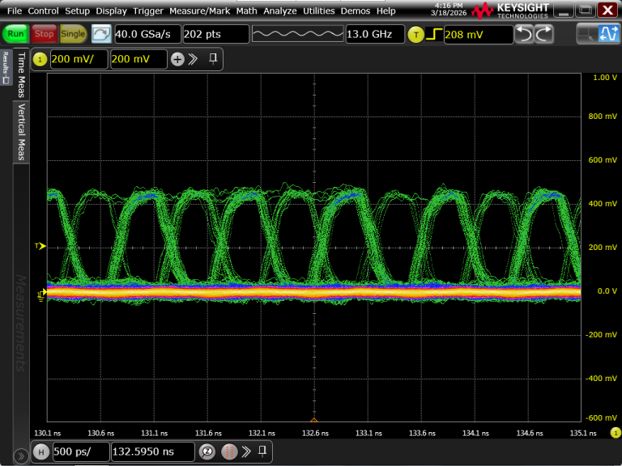
Figure 2: Eye diagram of the CA bus displayed on a high-bandwidth oscilloscope.
While the results in Figure 2 are surprisingly good, it is important to learn why. You see, in normal interposer implementations, probing unterminated signals is often a nightmare! The reason is articulated graphically in Figure 3. As can be seen in the figure, a normal interposer would have a relatively long trace that goes from underneath the BGA array of the memory device all the way to the edge of the interposer for oscilloscope probe attachment. Worse yet, the oscilloscope probe itself is high impedance. So, the result is a series of reflections that keep bouncing between the ball of the memory device and the oscilloscope probe. This is why a normal interposer often shows a “collapsed” eye when the signals being probed are unterminated. Please refer to Figure 4 for an illustration of this phenomenon.
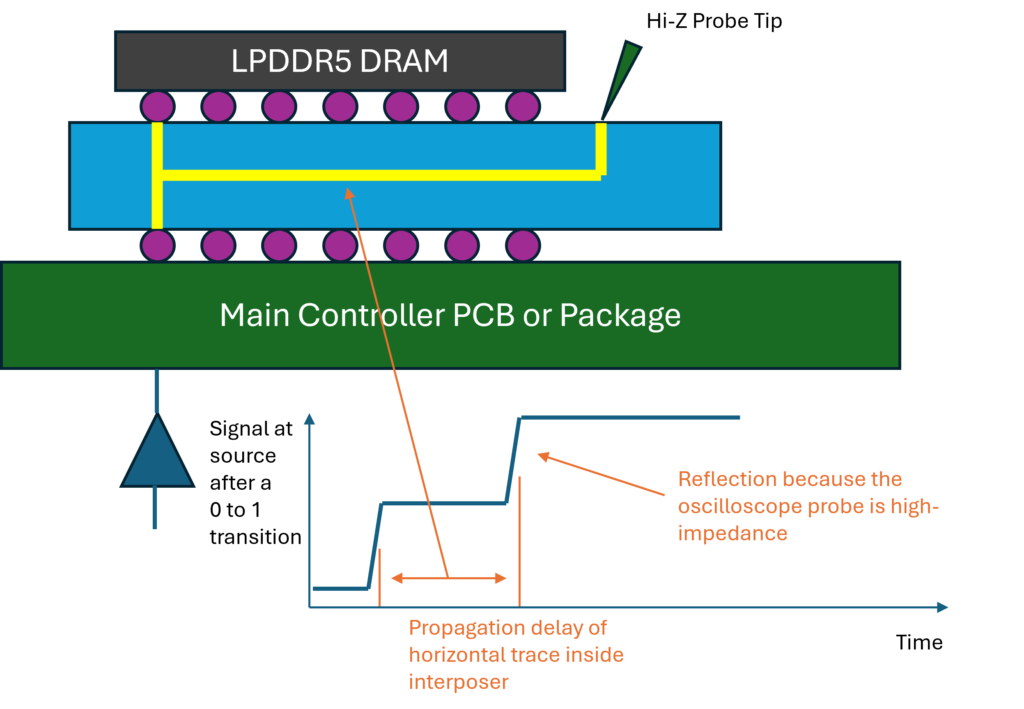
Figure 3: The challenge with probing unterminated signals.
The eye diagram in Figure 4 is the exact same phone that was probed previously in Figure 2, and the phone is executing the same memory stress test that we used in that figure. The only difference is that a regular interposer was now used with a high-impedance probe (Figure 4) as opposed to the Introspect integrated-tip interposer and RSHs (Figure 2). So, the reflections in the regular interposer are creating too much loss at the 2.133 Gbps data rate (1.066 GHz). The result is a much more closed eye.
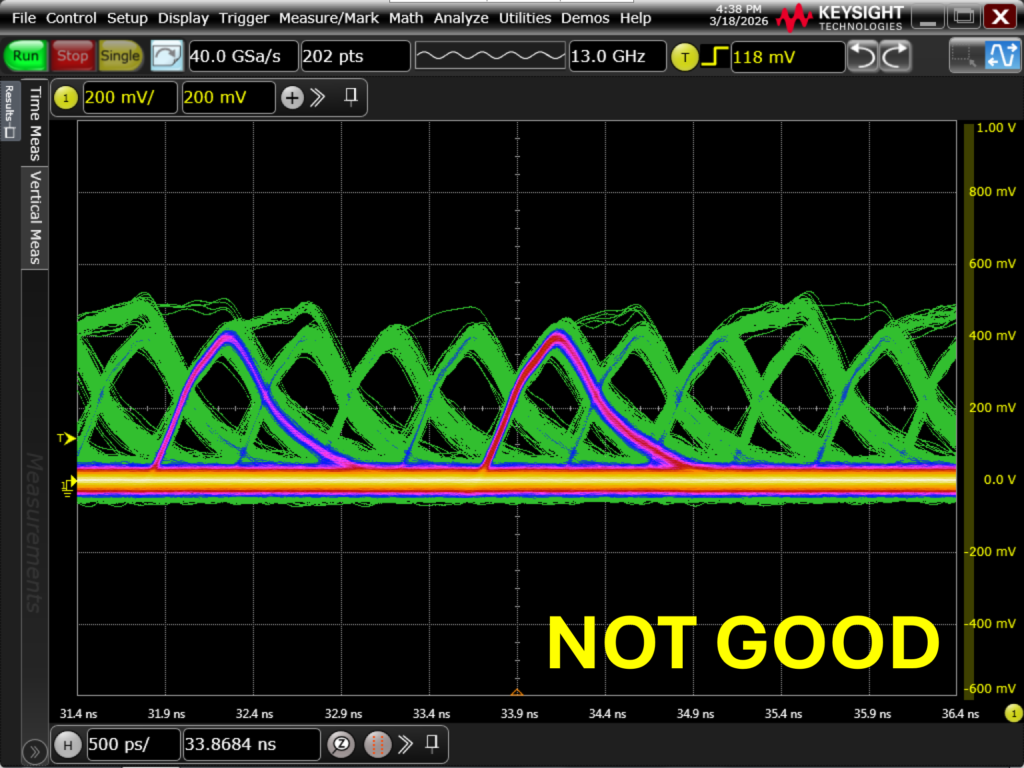
Figure 4: The same signal as in Figure 2, but probed with a conventional interposer.
Figure 5 shows the data bus probed with both a regular interposer and the Introspect integrated-tip interposer. Now, of course, the data bus is running in terminated mode because it is operating at 8533 MT/s. So, the voltage levels are more in-line with the LPDDR5 levels. However, the issue in this case – for the regular interposer – is that the signal speed is so high. So, the regular interposer’s eye (left panel) is quite poor. On the other hand, the Introspect integrated-tip interposer eye (right panel) is so wide open even at 8533 MT/s.
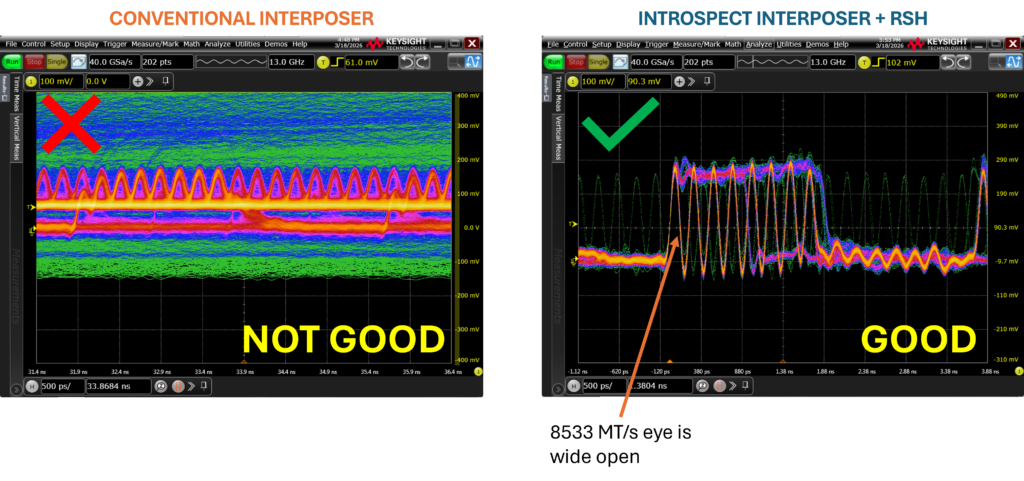
Figure 5: The DQ bus of the same phone as in Figure 2.
In this article, we decided to probe a modern-day smartphone by using Introspect’s integrated-tip interposer and an RSH2 active probe. What we discovered was fascinating. The phone was operating the CA bus in unterminated mode even when running at 8533 MT/s. More importantly, the Introspect probing solution showed incredibly clean eyes for both the CA bus (operating in unterminated mode) and the DQ bus (operating in terminated mode).
Do you need to perform oscilloscope probing with an active probe? Please reach out to us at info@introspect.ca for more information and to discover how easy our probe solution is.