Technical Insights
3 Ways the SV6E-X Can Help You Design Your Next SoundWire Interface
 5 min
5 min
4 min





You may not realize it, but MIPI SoundWire® is everywhere. Built as a low-power, scalable, and noise-resilient audio interface in 2014 by the MIPI Alliance, it’s at the heart of everyday devices: from headphones and microphones to laptops and automotives. As audio ecosystems become more complex, they demand new levels of capability. Enter MIPI SWI3S™, the next generation in SoundWire innovation.
SWI3S stands for SoundWire I3S. Released in September 2025, SWI3S supports a higher bandwidth of 76 Mbps (compared to 24 Mbps). While SoundWire supports a wide range of applications, SWI3S has honed in on the most useful aspects of SoundWire, and repurposed similar concepts to create an even more powerful and robust specification for audio applications. Figure 1 below depicts the SWI3S protocol in action.
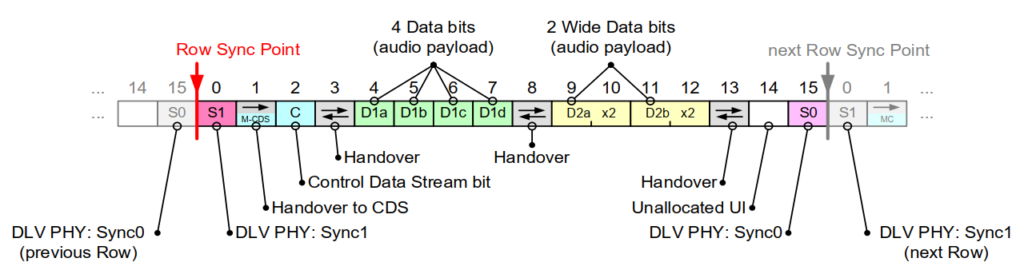
Figure 1: SWI3S row close-up.
Are you ready for SWI3S? Keep reading as we highlight some of the distinctive features of this new interface.
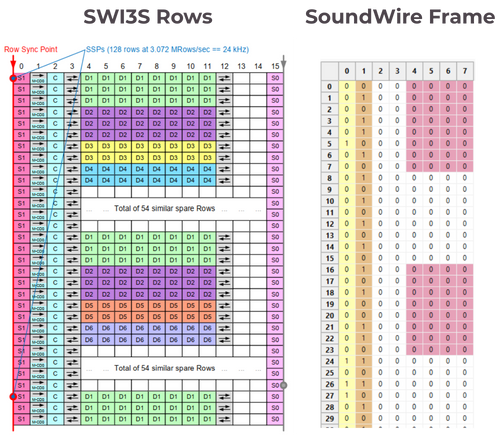
In SoundWire, the placement and relative bandwidth of configuration and status information (non audio data) is always in the same position in a ‘frame’ structure, which is made up of a number of pre-defined rows. There is a specific allocation of bits within these frames that is devoted to control-related operations – things like writing/reading to internal registers, and receiving device status reports. As a result, the placement of control data within the bit stream, and the allocation of the control bandwidth at a given moment, is deterministic and steady. This is useful for simple configuration instructions and periodic status updates. It also simplifies the operation for the engineer.
In SWI3S, the control data is transported in a more flexible row-based transport scheme and there isn’t a ‘frame’ structure. That is, the amount of bits dedicated for control data is more configurable and can change dynamically while the traffic is running. A full transport layer is implemented for this stream, allowing for more complex configuration operations. Figure 2 illustrates the full details of this command transport protocol.
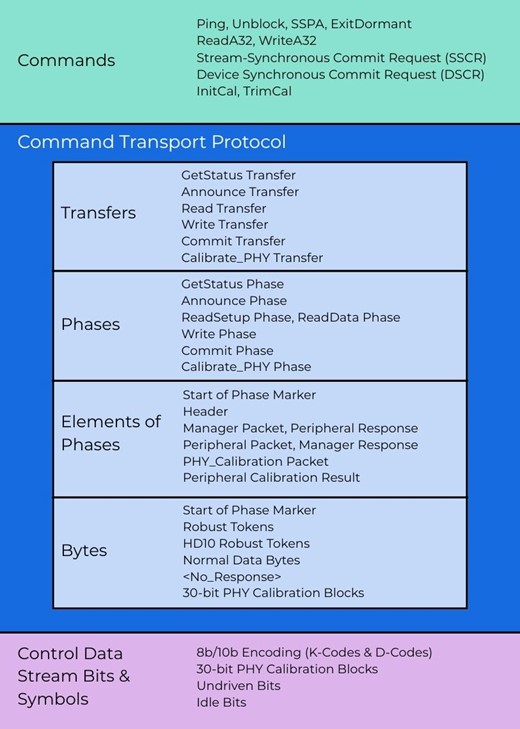
Figure 2: Command transport layer.
In Figure 3 below, see how the row-based transport scheme in SWI3S rows compares with a typical SoundWire frame.
While SoundWire supports a single PHY layer, SWI3S offers multiple PHY options such as Differential Low Voltage (DLV) and Forwarded Bit Clock Single-Ended (FBCSE). These options allow for implementation of more complicated audio setups which have challenging electrical configurations. The DLV PHY is suitable for higher maximum speed, low EMI emissions, and low EMC susceptibility. The FBCSE PHY, on the other hand, is for environments with a simpler electrical design and lower total link power consumption. Figure 4 below shows how SWI3S handles difficult real-world audio setups, with an example of a long cable in use.
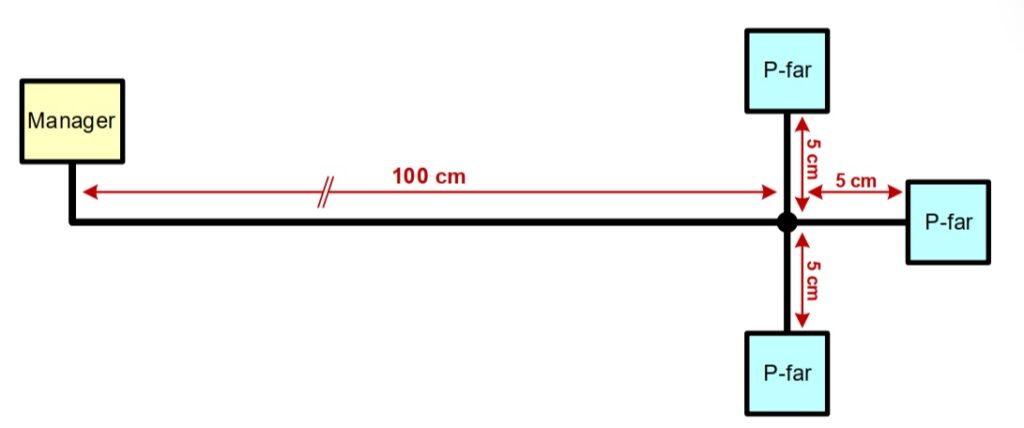
Figure 4: Example of a star-on-stick physical topology.
Whereas SoundWire uses a large set of parameters for data placement, SWI3S uses the periodicity of the row structure within the bit stream, with a smaller set of parameters, to place the data. This allows the naturally occurring multiples of the sampling frequencies to create repeating patterns without the frame restriction.
SWI3S shares many characteristics with SoundWire, and it also introduces distinct features. Figure 5 provides a visual comparison of each interface’s capabilities, making it easy to see where they align and where they differ.
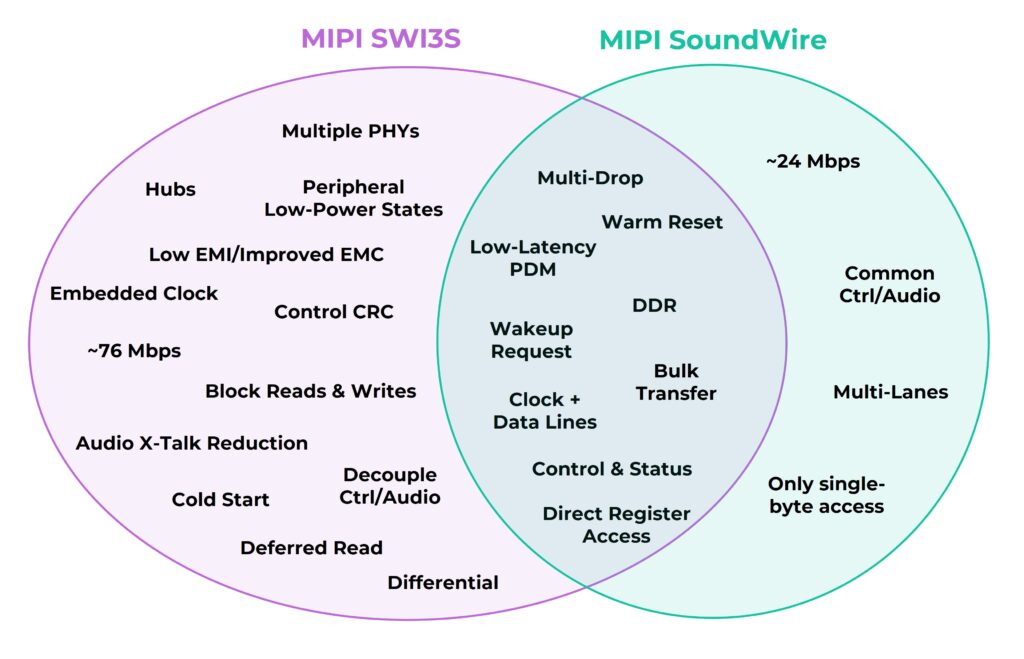
Figure 5: Diagram comparing SWI3S and SoundWire at a glance.
In this article, we covered three important distinctions about SWI3S: dynamic placement of control data, PHY layer configurations, and payload placement parameters. We’re thrilled to be part of the SWI3S ecosystem and to share these valuable insights with you. We look forward to helping you design your latest audio application.
Implementing or testing SWI3S? Email us at info@introspect.ca with your questions or challenges. We’re here to help!