
Technical Insights
Why We Embedded a Full-Fledged Real-Time Oscilloscope Inside our SV6E-X Mid-Frequency Digital Test Module
 4 min
4 min


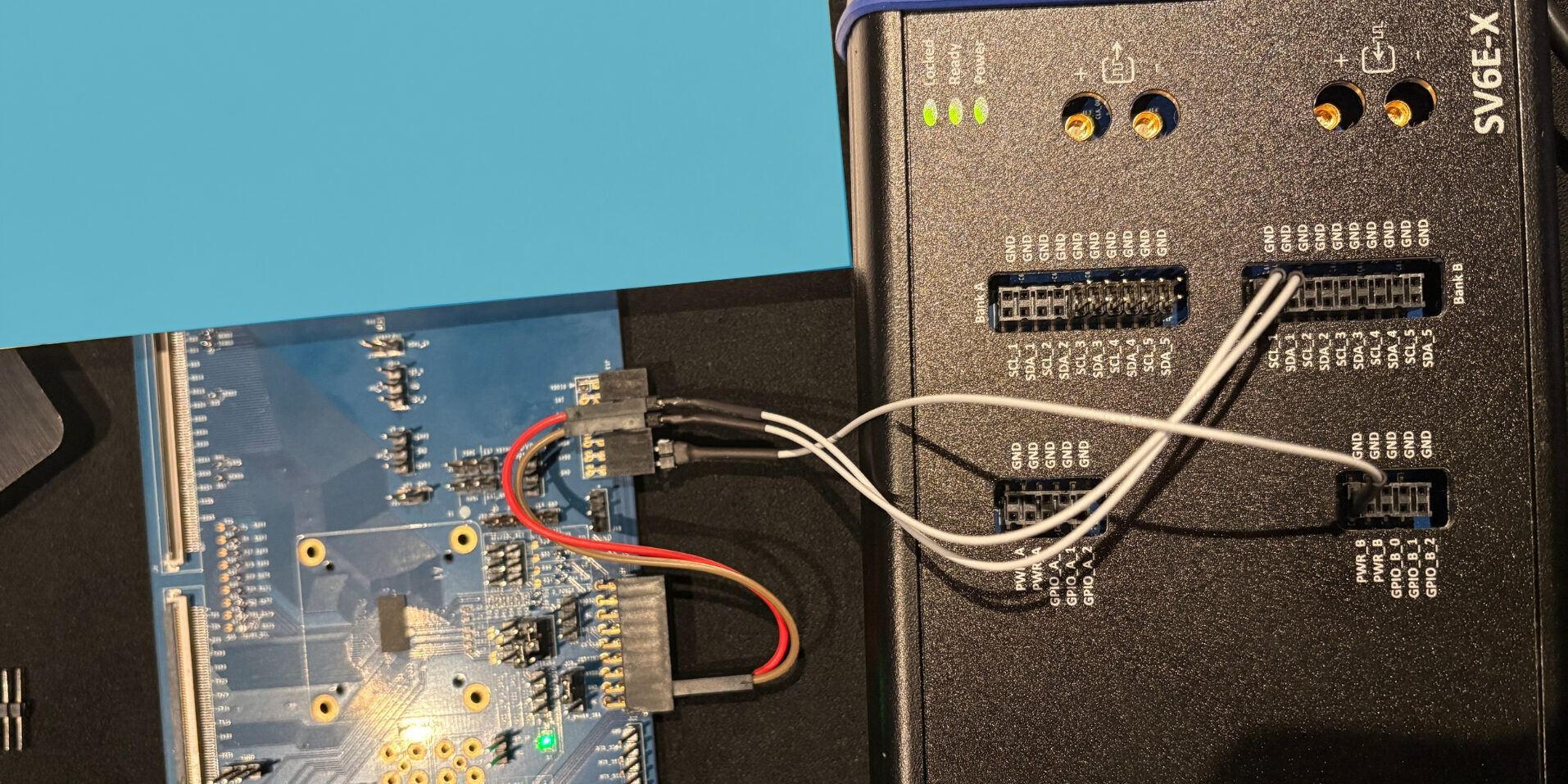

Introspect Technology participated in the MIPI I3C Plugfest in Taipei, Taiwan, on October 19–20, 2026. As an ardent participant in these interoperability events, we value the opportunity to work alongside device developers and to test emerging implementations. We’ve been doing it from the time we first participated in 2018 because we can help with our integrated and complete solution and help advance the I3C ecosystem.
Our SV6E-X Mid-Frequency Digital Test Module combines I3C controller and target capabilities with protocol analysis and the embedded PurVue Analyzer®, a real-time, high-resolution oscilloscope. Figure 1 shows an SV6E-X testing a new device. This integrated approach allows engineers to observe electrical waveforms and protocol behavior through the same test connection, meaning, without a separate oscilloscope or external high-impedance probe. It also avoids the added probing connections that can add capacitive loading and ground loops which produces noise, electromagnetic interference, or reflections.
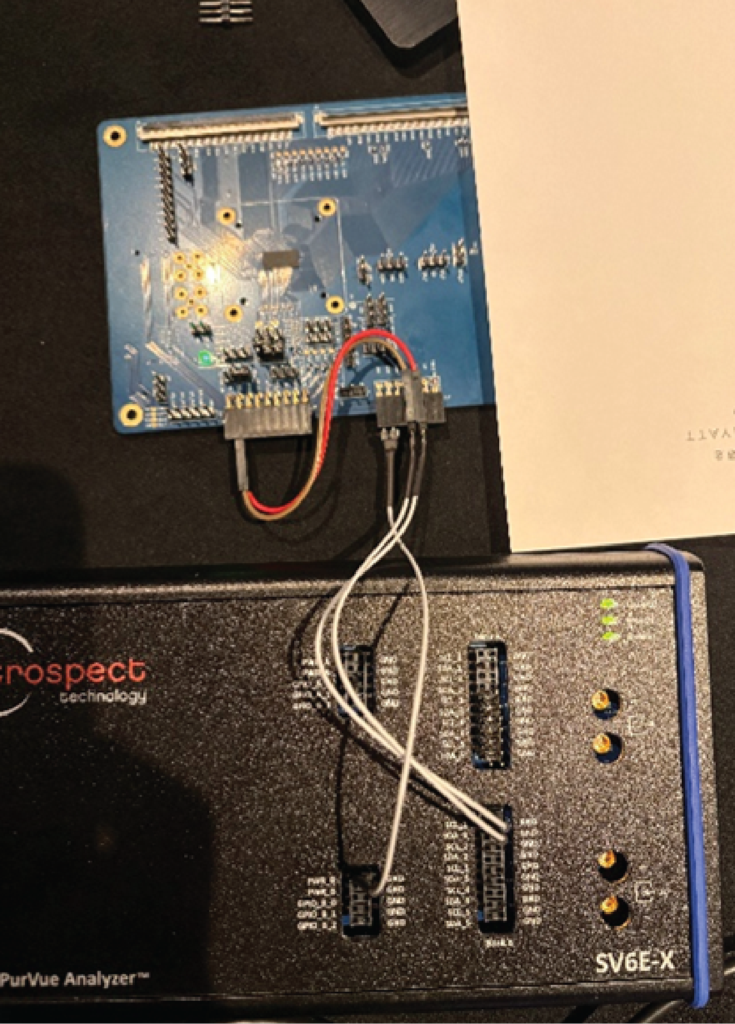
Figure 1: SV6E-X Mid-Frequency Digital Test Setup
So, what did we learn this time? Read on to learn about our biggest takeaways from this event!
As I3C adoption expands, interoperability testing remains essential for confirming that devices from different manufacturers can communicate reliably. Over the years, Introspect Technology has served as a referee at these interoperability events, identifying which designs adhere to the specifications, which fall short, and which maintain a high operating margin. And this year, after almost 10 years of plugfests since the first one in Korea in 2018, we were happy to see the remarkable maturity in the participant designs and implementations! There is a definite coming of age for I3C implementers and adopters, which is very encouraging to see.
Of course, this doesn’t mean that there weren’t issues – otherwise, there would be no need for a plugfest. However, the issues we saw were subtle, requiring targeted investigations rather than straightforward protocol troubleshooting.
One device, for example, as shown in Figure 2 (left side), exhibited a problem at a clock frequency of 10 MHz, while tests at lower and higher frequencies worked well, as shown in Figure 2 (right side). Such a frequency-specific result illustrates why testing a device at only one operating point may not reveal every issue. Investigating the behavior across different conditions is essential to understanding the cause.
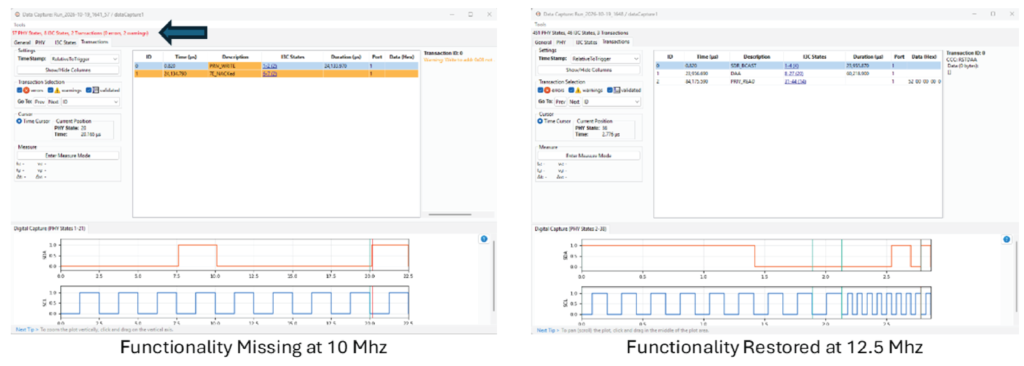
Figure 2: Example of Targeted Investigation Using Variable Frequencies
The plugfest gave participating companies a shared environment to test their I3C implementations, and findings like this one help us investigate compatibility issues before products reach customers.
A familiar challenge returned at this plugfest: signal integrity issues caused by incorrect test wiring. In one of the sessions, noisy waveforms were observed with conventional wires. Replacing them with Introspect’s shielded cables resolved the signal integrity issue. Figure 3 below shows the before and after results of utilizing shielded cables.
We discussed this challenge in our previous post, “Our Biggest Takeaway From the Most Recent MIPI I3C Plugfest in Taipei”. Even when the I3C clock frequency appears modest, fast signal edges can make a test setup vulnerable to crosstalk and other signal-integrity effects.
With the PurVue Analyzer embedded in the SV6E-X, engineers can inspect the waveforms directly without adding a separate oscilloscope connection, identify the problem, change the wiring, and compare the results.
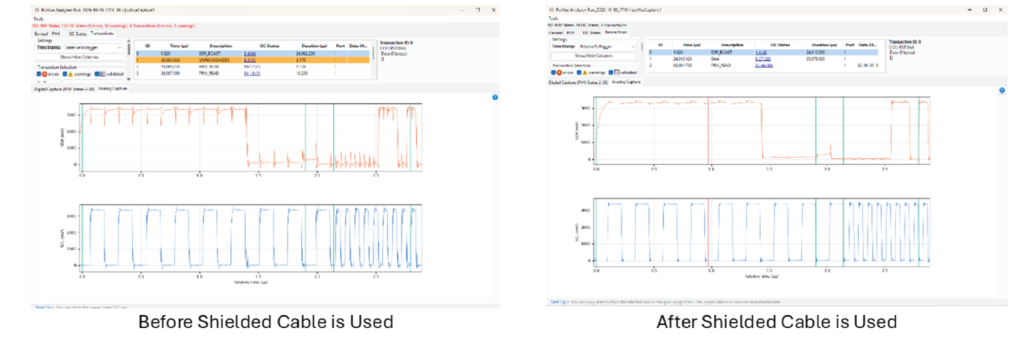
By linking protocol behavior to physical signals through a single test connection, engineers can quickly compare waveforms and verify improvements. This connection matters because reliable I3C testing depends on both the device and the wires connecting it.
The 2026 plugfest reinforced two lessons: I3C implementations continue to mature, and reliable interoperability testing depends on both device behavior and the quality of the physical test setup. By combining protocol testing with real-time waveform visibility in one instrument, Introspect helps engineers investigate both.
Please reach out to us at info@introspect.ca to learn more about our high-performance digital I/O test modules and I3C implementations.


